



General Publications
Setting the Record Straight with Houkura
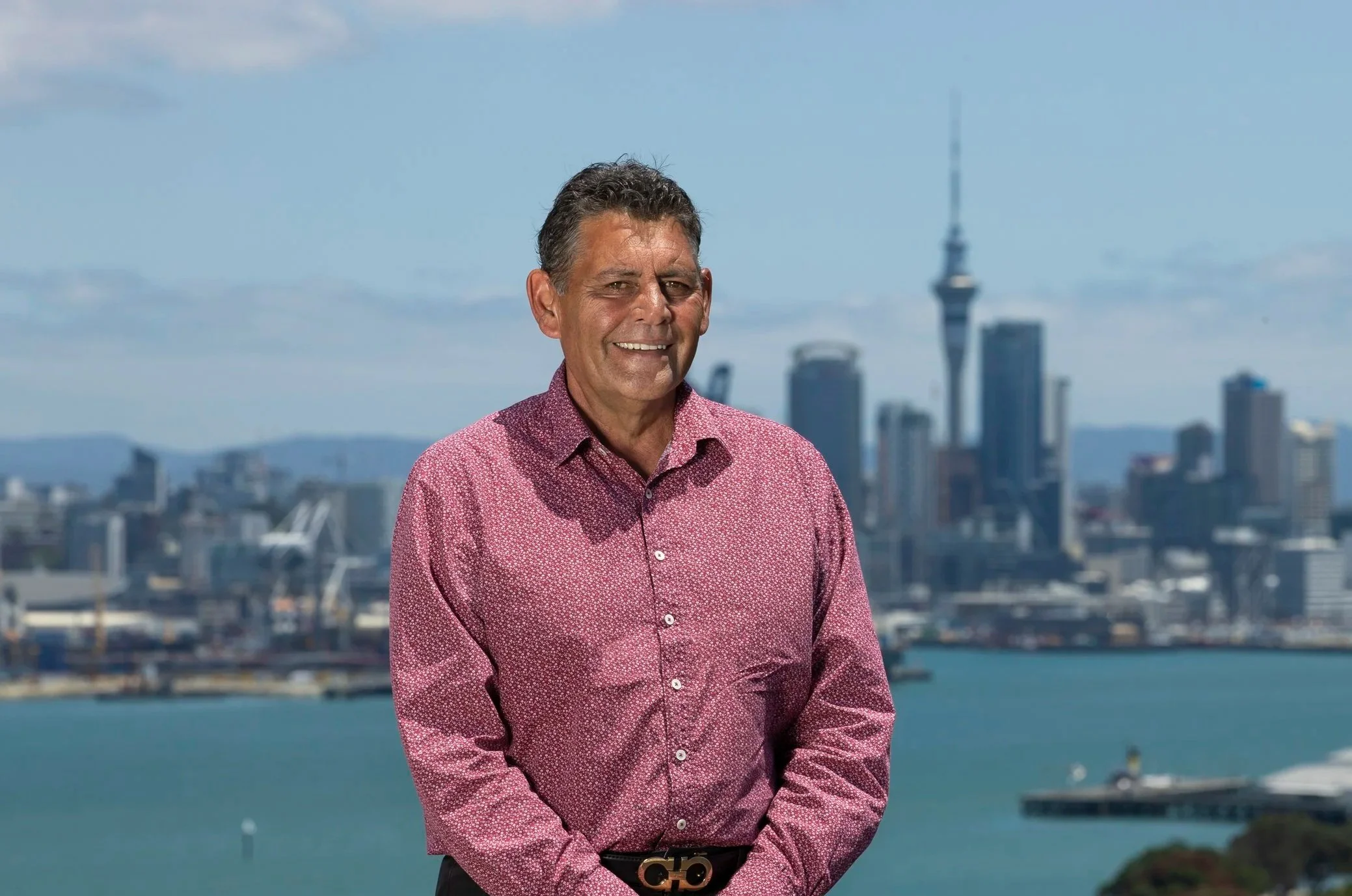
Nā David Taipari - Chair
Houkura, known until 2024 as the Independent Māori Statutory Board, was not born from lobbying or political pressure. It was created by an Act of Parliament, the Local Government (Auckland Council) Act 2009, following a two-year Royal Commission inquiry into Auckland governance, in which Māori representation was central.
I was there from the start, on the Tāmaki Regional Mana Whenua Forum. The then Minister of Local Government, Rodney Hide, met with us as a group. Some iwi wanted dedicated seats on the new governing body. Rodney was direct: he couldn't support seats, but as he put it, we'd been here a thousand years, so there needed to be something.
The Royal Commission eventually recommended three dedicated Māori seats on the governing body. We had submitted for something larger again, an independent statutory board with nineteen seats. The government of the day chose a different path again. I remember one meeting with John Key, Rodney Hide and Pita Sharples in the room, Key in the middle, saying plainly that a solution had to be found between those who wanted seats and those who didn't. That is what produced the model Parliament eventually settled on: an independent statutory board, not seats at the table.
Department of Internal Affairs officials drafted the legislation, and the whole thing went to select committee for public submission, so the country had its chance to weigh in on what Parliament was proposing. Even then, what emerged was more limited than the Commission had recommended: nine seats, not nineteen, and a board, not seats on the governing body itself.
How Houkura came to be
Who we represent, and who we don’t
Our nine members represent mana whenua and mātāwaka, the wider Māori community living in Auckland. Getting from nineteen iwi down to nine seats meant building cluster groups, four mana whenua clusters covering all nineteen iwi, plus two mātāwaka members appointed through a public expression-of-interest process. The whole appointment process is run by an iwi selection body, a formal statutory mechanism convened every three years by the Minister of Māori Development, who writes to all nineteen iwi to select their representative. It is not us picking ourselves, and it is not a council process either, it is a legislated process.
We are independent of council, and independent of the iwi who sit on our own selection body too, even though that independence isn't always easy to hold to. That is the principle we are built on, and it is why we can speak for the region rather than for any one part of it.
What we actually vote on
It's worth being precise about what our vote actually means. We sit on Auckland Council committees responsible for natural and physical resources, and we have a vote in those committees, the same way council's own ethnic, rural and disability advisory panels do. We do not have a vote on the governing body itself. All final decisions rest with the governing body alone. We recommend; we don't decide. We do not set rates. We do not run the council. We are the independent Māori voice in the governance of a city where, according to the 2023 Census, almost 228,000 Māori call home, up from just over 207,000 in 2018, the largest population of Māori descent anywhere in the country.
Our two votes don't swing decisions either. At committee level we sit alongside twenty-one elected members, normally a commanding elected majority, unless a committee has split down the middle, which has happened, and in those moments our two votes have mattered more than usual.
In practice, this has meant nine of us doing the mahi of nineteen, including helping council reach quorum on occasions it otherwise couldn't have done its business, and consistently raising issues that don't make headlines: our marae serving as civil defence hubs, or the lack of public transport for whānau in the South and West who commute into the city for work.
The funding explained
Two separate figures are routinely mixed up. Our own operating budget sits at roughly $3.5 million a year, about $2 per Aucklander. That funds our Te Tiriti o Waitangi audits of council's obligations to Māori, He Whenua Makaurau (Issues of Significance), and our strategy and ongoing advocacy. We have run that budget with an underspend for sixteen years, and being funded to do our role is provided for in the legislation.
By contrast, when we had an independent review of what council itself had actually spent of the separate Māori outcomes budget it had allocated in one of our early years, the figure was roughly a quarter of the allocated spend. Council was not even spending what it had set aside.
The second figure is the council's Long-Term Plan (LTP) fund for Māori outcomes across the whole region, social, environmental, economic and cultural development. That is not money for Houkura to run itself. The most recent ten-year LTP set it at $150 million, later adjusted to roughly $171 million. The current LTP review proposes around $17.1 million a year going forward. We advocate for that fund. We do not control it, and we never have.
Continuity
Houkura has been here through three mayors and on our sixth term of council. That continuity reflects an institution doing genuine mahi for the people it was created to serve, regardless of who holds office.
Houkura was put here by Parliament, after years of genuinely contested debate, because Māori in Tāmaki Makaurau have the right to a permanent voice in the governance of their city. The 2023 Census shows almost half of Māori in this region, 47.5 percent, are under twenty-five. It is that generation who will live longest with whatever we get right or wrong over the next few years.
We are trying to turn around a hundred and fifty years of neglect in the space of sixteen. That was never going to happen overnight, and it still hasn't. But it is a great deal better than it was on day one. We have become something like council's conscience on doing right by all of Auckland, not just part of it. We will keep doing our mahi. It has never mattered more.

Houkura Principles of the Treaty of Waitangi Bill - Submission Open

PWC - Assessment of expenditure incurred by Auckland Council on projects to deliver Māori outcomes 2017 Open

KPMG - Independent assessment of expenditure incurred by Auckland Council to achieve Māori outcomes 2014 Open

Analysis of the regional fuel tax and increase to national Fuel Exercise Duty Open